Mastering Interior Paint Colors: Your Comprehensive Guide to Flawless Selection
Embarking on a home painting project can be an incredibly exciting endeavor, transforming a room or even an entire house with a fresh coat of color. Yet, for many, the mere thought of choosing the perfect paint color can feel overwhelmingly daunting. It’s a decision that goes far beyond simply picking a shade you like; it involves a delicate dance between personal style, existing décor, and a myriad of environmental factors. The right color can breathe new life into a space, creating a harmonious and inviting atmosphere, while the wrong one can lead to costly regrets and a room that never quite feels “right.”
Like many homeowners, I’ve had my share of painting adventures – and misadventures! My husband, Randy, often jokes about the layers of paint our former homes accumulated, a testament to my evolving tastes and sometimes, my initial struggle to pinpoint that ‘just right’ shade. Each brushstroke became a lesson, teaching me invaluable insights into the subtle nuances of color selection. Over the years, through trial and error, I’ve gathered a collection of simple yet powerful tips that demystify the process, helping you choose paint colors with confidence and achieve stunning results. This comprehensive guide is designed to equip you with the knowledge and strategies needed to navigate the vast world of paint swatches, ensuring your next painting project is a resounding success.
Understanding the Influences: What Affects Paint Color in Your Space?
Before diving into specific tips, it’s crucial to understand that a paint color is never seen in isolation. Its appearance is dynamically affected by numerous elements within your home. Ignoring these factors is a common pitfall that often leads to disappointment. Here’s a closer look at the key influences you must consider:
- Natural Lighting: The direction your windows face profoundly impacts how natural light interacts with color. North-facing rooms tend to have cooler, blue-gray light, making colors appear more subdued. South-facing rooms receive bright, warm light throughout the day, which can intensify colors and bring out warmer undertones. East-facing rooms get bright, warm morning light, which fades to cooler tones in the afternoon, while West-facing rooms are cool in the morning but flooded with intense, warm light in the afternoon and evening. Always observe your space at different times of the day.
- Artificial Lighting: The type of light bulbs you use plays a significant role. Incandescent bulbs cast a warm, yellowish glow, enhancing warm colors and softening cool ones. Fluorescent lights often have a cool, bluish cast. LED lights come in various color temperatures (warm white, cool white, daylight), so match your bulb choice to the desired mood and how it interacts with your chosen paint color.
- Room Size and Shape: Lighter colors tend to make a room feel more expansive and open, reflecting more light. Darker colors absorb light, making a room feel cozier and more intimate, but can also make a small space feel smaller if not used judiciously. The architectural features, such as ceiling height and wall angles, also influence how light and shadow play across painted surfaces.
- Existing Elements (Fixed Finishes): Your flooring, trim, furniture, artwork, and even the natural light coming through your windows are all existing colors that will interact with your new paint. For instance, warm oak floors will make a cool gray paint look different than a cool-toned tile floor would. Always consider how your chosen color will harmonize or contrast with these permanent features.
- Time of Day: As natural light shifts from sunrise to sunset, so too does the appearance of your paint color. A color that looks vibrant in the morning might appear muted in the evening, and vice-versa. Patience and observation are paramount; a quick decision rarely yields the best outcome.
- Emotional Impact and Room Function: Beyond aesthetics, colors evoke emotions. Blues and greens often create a calm, serene atmosphere, ideal for bedrooms and bathrooms. Yellows and oranges can be energetic and uplifting, suitable for kitchens or playrooms. Reds can be passionate and dramatic, perhaps for a dining room or accent wall. Consider the primary function of the room and the mood you wish to create.
Essential Tips for Choosing Your Perfect Paint Color
Given the complexity of color perception, rushing into a decision can be a costly mistake. Even a color you adore in a friend’s home or a magazine might look completely different in your own space due to varied lighting and existing décor. Based on years of experience, here are my tried-and-true strategies to help you confidently select the ideal paint color for your home.
1. Always See It In Person & In Your Space
Resist the temptation to finalize your paint color solely from an online image, a digital rendering, or a glossy magazine spread. Computer monitors and printed materials (other than actual paint swatches) rarely display accurate color. Differences in screen calibration, printing processes, and the absence of your room’s unique lighting environment mean that what you see online is often not what you’ll get on your walls. While these sources can be excellent for inspiration and narrowing down potential palettes, they are not reliable for making a final decision. Even professional online suggestions should always be validated with a physical swatch in your actual living space. This critical first step ensures you’re working with the true representation of the color.
2. Harness the Power of a Plain White Canvas
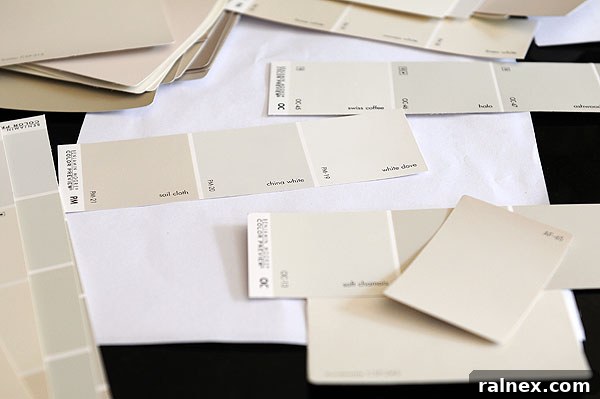
When you visit the paint store, grab a variety of swatches in the tonal range you’re considering – don’t be shy, pick up several! Once home, find the whitest possible surface to place them on. This means a true, stark white, not an off-white, cream, or pink-tinged white. A simple piece of poster board or even plain printer paper works wonders. Why white? Because a neutral white background provides an unbiased canvas that allows the true undertones of each paint color to reveal themselves. Without this neutral backdrop, surrounding colors in your home (like existing wall paint, furniture, or flooring) can skew your perception of the swatch, making it appear different than it truly is.
Place your chosen swatches on this white surface within the room you intend to paint. Now, observe them carefully. Does that seemingly ‘neutral’ beige suddenly have a surprising yellow cast? Is the gray leaning unexpectedly blue or even pink? Is it warmer or cooler than you anticipated? This exercise helps you quickly identify and eliminate colors that carry unwanted undertones. Once you’ve narrowed down your selection, move the white board with your preferred swatches around the room, taping it to different walls and observing it throughout the day under varying natural and artificial light conditions. This allows you to see how the color changes and interacts with all aspects of your space, helping you delete choices until you have a clear front-runner.
3. Never Skip the Sample Pots: Test, Test, Test!
I understand the desire to rush, especially when you’re excited to get your project underway. However, unless you’re a seasoned color expert or repeating a previously successful color, investing in sample pots is an invaluable step that can save you significant time, money, and heartache. Purchasing a full gallon (or three!) based solely on a small swatch is a gamble that rarely pays off in the long run.
Here’s the most effective way to test your top contenders:
- Paint Directly on the Wall: Choose a few inconspicuous spots on different walls within the room and paint a section that is at least 2 feet by 2 feet. This larger area gives you a much better sense of the color’s depth and how it will appear on a broad surface compared to a tiny swatch. Paint a patch on a wall that receives direct natural light and another on a wall that remains in shadow.
- Utilize Poster Board: In addition to painting directly on the wall, paint a piece of white poster paper (the dull/matte side is best) with each sample color. Paint a generous area, leaving a white border around the edge. This painted poster board is incredibly versatile; you can easily move it around the entire space, taping it to different walls, placing it next to trim, furniture, artwork, or other fixed features. This flexibility allows you to compare colors side-by-side with various elements of your room without committing permanent paint patches everywhere.
Colors can vary drastically depending on unique room factors. The number and orientation of windows, the type of flooring, the size of the room, and even the existing furniture can all dramatically alter a color’s perceived hue. For example, during a recent retreat remodel, I selected a paint color that looked absolutely perfect in one room but completely off in another. After extensive observation and re-comparing swatches, the culprit was the flooring. One room featured very warm, yellow-toned heart pine flooring, which brought out unexpected warm undertones in the paint, while the other room had cooler-toned hardwood, allowing the paint’s true, intended character to shine. Despite being the exact same color, the end results were entirely different. This anecdote underscores the critical importance of testing samples directly in each room where the color will be used, especially if fixed elements like flooring differ between spaces. Give yourself at least a full day, ideally several days, to observe the painted samples under varying light conditions and at different times before making your final decision.
4. Embrace the Concept of Undertones
Every color, even seemingly neutral ones like gray, beige, or white, has an underlying base color, known as an undertone. These subtle hints of other colors (like blue, green, red, yellow, or purple) are what make a gray look “cool” or “warm,” or a white appear “crisp” or “creamy.” Identifying undertones is key to achieving a cohesive look. A gray with a blue undertone might clash with warm beige furniture but harmonize beautifully with a navy sofa. The white paper test (Tip 2) is excellent for revealing these hidden undertones. Pay close attention to how the undertones of your chosen paint interact with the undertones of your flooring, upholstery, and existing finishes. A mismatch in undertones can make a room feel disjointed, even if the individual colors are appealing on their own.
5. Consider the Flow: Harmonizing Colors Between Rooms
In homes, especially those with open-plan layouts, it’s not enough to choose a color for just one room in isolation. Think about how colors transition from one space to the next. A harmonious flow ensures that your home feels cohesive and welcoming. This doesn’t mean every room has to be the same color. Instead, consider using variations of the same color (lighter or darker shades), colors from the same color family, or complementary colors that share similar undertones. Create a “whole house color palette” where each room contributes to the overall aesthetic without abrupt or jarring transitions. This creates a sense of calm and sophistication throughout your living environment.
6. Don’t Overlook the Sheen (Paint Finish)
The paint’s finish, or sheen, dramatically affects both its appearance and durability. Different sheens reflect light differently, making a color appear more vibrant or subdued, and also impact how easy a surface is to clean.
- Matte/Flat: Offers a non-reflective, sophisticated look. Best for low-traffic areas and ceilings as it hides imperfections well but is less durable and harder to clean.
- Eggshell/Satin: A popular choice for living areas, bedrooms, and hallways. Offers a subtle luster, is more durable than flat, and easier to clean. Eggshell has a slight sheen, while satin is a bit glossier.
- Semi-Gloss: Highly durable and washable, making it ideal for high-traffic areas like kitchens, bathrooms, trim, and doors. It has a noticeable shine.
- High-Gloss: The most durable and reflective finish, often used for trim, doors, and furniture for a dramatic, mirror-like effect. It requires very smooth surfaces as it highlights imperfections.
Always consider the function of the room and the desired level of maintenance when choosing a sheen. A deep, rich color will look more intense and luxurious in a flat finish, while the same color in a semi-gloss will appear brighter and more reflective.
7. Trust Your Instincts, But Verify with Evidence
Ultimately, your home should reflect your personal style and preferences. While trends can be inspiring, don’t let them dictate your choices entirely if they don’t resonate with you. Use these tips as tools to guide your decision-making process, helping you to confidently verify that your gut feeling about a color will translate beautifully onto your walls. The goal isn’t just to pick a ‘good’ color, but to pick the ‘right’ color for *you* and *your* home.
Conclusion: Your Path to Confident Color Selection
Choosing paint colors doesn’t have to be a source of stress. By approaching the task with patience, armed with a few simple strategies, and a willingness to test your choices thoroughly, you can transform your home with confidence. Remember to observe, compare, and always verify your selections in the actual environment they will inhabit. These steps will empower you to create spaces that not only look fantastic but truly feel like home.
Happy painting!