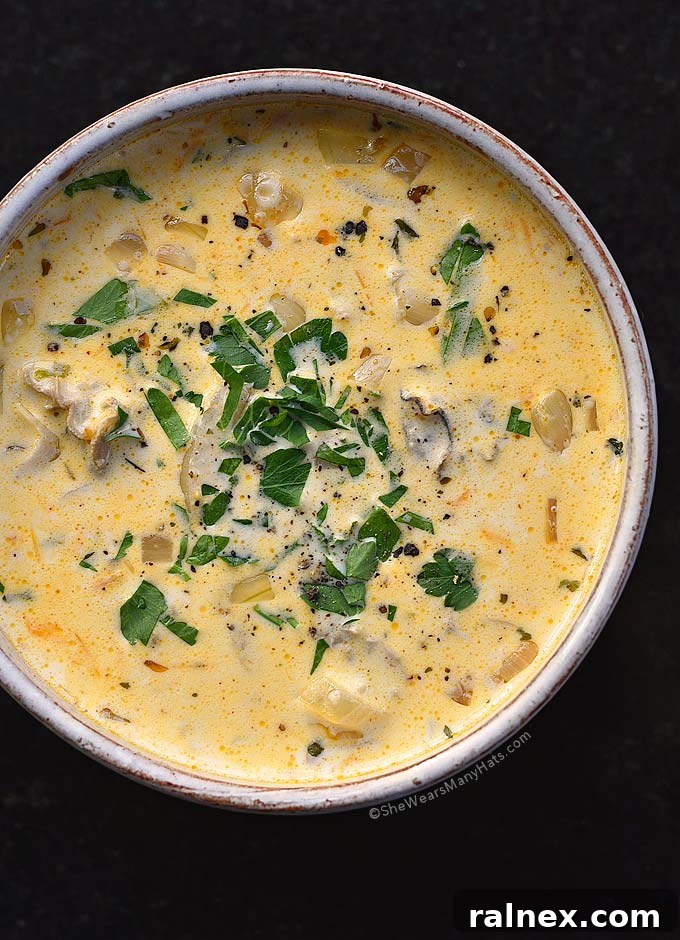
Oyster Stew is more than just a dish; it’s a comforting embrace on a cold day, a culinary tradition, and a testament to the simple elegance of fresh ingredients. There’s something uniquely satisfying about a warm, creamy bowl of this classic seafood stew that instantly chases away the chill and brings a sense of warmth and well-being. Whether you’re seeking a hearty lunch or a soothing dinner, this savory delicacy promises a delightful experience, perfectly balancing the briny freshness of oysters with a rich, velvety base.
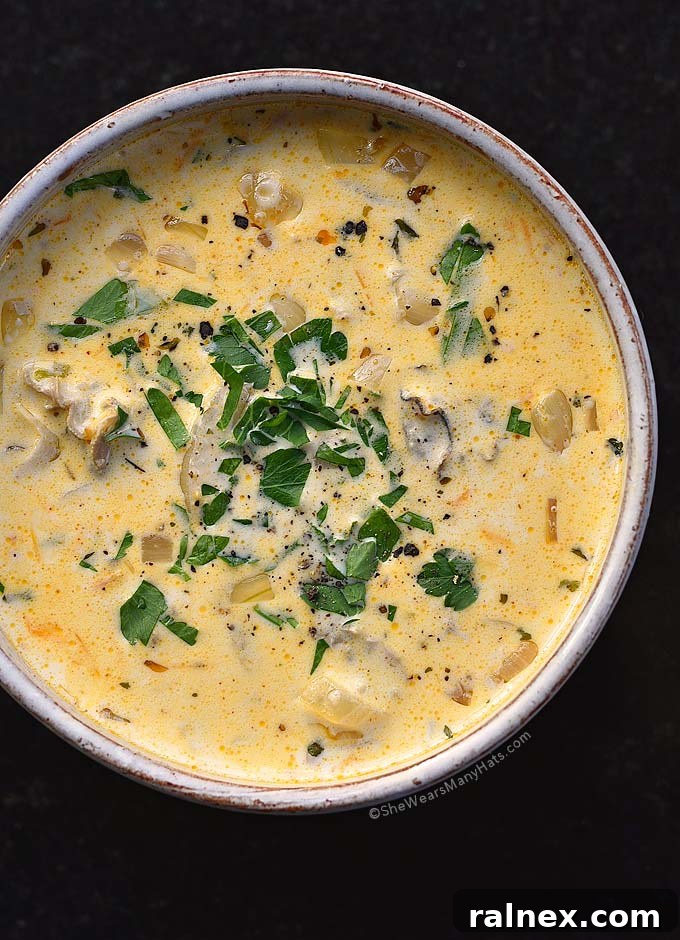
On those particularly brisk days, when the desire for something warm and substantial becomes undeniable, my thoughts often drift to the comforting allure of a good stew. From hearty soups to robust chilis, the options are plentiful, but few hold the same nostalgic charm as Oyster Stew. For many, including myself and my partner Randy, this dish is a cherished memory from childhood, a culinary highlight enjoyed often. The old adage, “only eat oysters in months with an ‘R’,” traditionally dictated prime oyster season, making those crisp autumn and winter months the perfect time to indulge in this exquisite stew.
If you’re new to the world of Oyster Stew, prepare for a revelation. Its delicate flavor profile and creamy texture set it apart from other seafood dishes. While it might be an acquired taste for younger palates – our own children are still coming around to its unique charm – it remains a firm favorite for adults, especially during the festive holiday season. It’s a dish that evokes a sense of tradition and celebration, perfect for gathering around with loved ones.
Beyond its delightful taste, one of the most appealing aspects of Oyster Stew is its incredible simplicity and speed of preparation. Don’t be intimidated by the idea of cooking with oysters; the process is remarkably straightforward. The key lies in two critical steps: ensuring the milk never reaches a rolling boil, which can cause it to curdle, and gently cooking the oysters just until their edges curl, preventing them from becoming tough and rubbery. Follow these easy guidelines, and you’re guaranteed a spectacular dish. This is truly easy cooking, promising a warm, scrumptious bowl of goodness in minimal time. So, why wait? Embrace the warmth and flavor of this classic stew today!
The Essence of Oyster Stew: A Culinary Comfort
Oyster stew boasts a rich history, particularly in coastal regions and the American South, where oysters have long been a staple. It’s often associated with holiday traditions, especially Christmas Eve, symbolizing abundance and celebration. The stew’s beauty lies in its minimalist approach, allowing the natural sweetness and briny notes of fresh oysters to shine through. This recipe elevates that simplicity with a thoughtful blend of seasonings, ensuring a flavorful depth that satisfies the palate without overwhelming the star ingredient.
Key Ingredients for a Perfect Oyster Stew
Creating an exceptional Oyster Stew starts with selecting high-quality ingredients. Each component plays a crucial role in building the stew’s characteristic flavor and creamy texture.
- Butter: The foundation of flavor. Opt for unsalted butter to control the overall saltiness of the dish.
- Diced Onion: Provides a subtle sweetness and aromatic base when sautéed until tender.
- Garlic Cloves: Essential for depth, contributing a pungent, savory note that complements the seafood.
- Ground Red Pepper: Adds a gentle warmth and a hint of spice, easily adjustable to your preference.
- Paprika: Offers a mild, sweet, and slightly smoky flavor, enhancing the stew’s color and complexity.
- Salt & Ground Black Pepper: Fundamental seasonings to bring out the best in all ingredients.
- Whole Milk or Half and Half: The heart of the stew’s creamy body. Whole milk provides a lighter creaminess, while half-and-half (or even heavy cream for an extra rich stew) offers a more luxurious texture. Avoid skim milk, as it lacks the fat content needed for richness and is more prone to curdling.
- Dried Parsley: Contributes a fresh, herbaceous note and a pop of color. Fresh parsley can also be used for garnish.
- Fresh Raw Oysters: The undisputed star. The fresher, the better. Look for plump, briny oysters, ideally shucked just before use. The liquid they come in, often called “oyster liqueur,” is indispensable for authentic flavor.
Crafting Your Own Oyster Stew: Step-by-Step Guide
Preparing this delicious stew is a straightforward process, but paying attention to a few details will ensure a perfectly creamy, flavorful, and tender result.
- Melt the Butter: Begin by melting a generous amount of butter over medium heat in a heavy-bottomed 3-quart saucepan. A heavy-bottomed pan is crucial for even heat distribution, preventing scorching, especially when working with milk.
- Sauté the Onion: Once the butter has melted and is shimmering, add the diced onion to the saucepan. Sauté the onion for about 5 minutes, stirring occasionally, until it becomes tender and translucent. Avoid browning the onion, as this can add an unwanted bitter note to the delicate stew.
- Infuse with Garlic: Add the minced or grated garlic to the softened onions. Continue to sauté for another 1-2 minutes, stirring constantly. Be extremely careful not to burn the garlic, as burnt garlic can quickly turn bitter and ruin the flavor of your stew. The goal is to release its aromatic oils.
- Toast the Seasonings: Stir in the ground red pepper, paprika, salt, and black pepper. Continue to stir the mixture for about 1 minute. Toasting the dry spices briefly in the butter and aromatics helps to bloom their flavors, intensifying their aroma and taste within the stew.
- Prepare the Oysters: Carefully drain the fresh oysters, but crucially, reserve all of their natural liquid – this is the valuable “oyster liqueur” that holds so much of the oyster’s essence. Set the drained oysters aside.
- Build the Creamy Base: Reduce the heat to low. Pour in the milk (or half and half), add the dried parsley, and gently stir in the reserved oyster liqueur. This mixture forms the heart of your stew.
- Heat Gently: Cook the mixture over low heat, stirring frequently, until it is hot and just beginning to steam. You should see tiny bubbles starting to form around the edge of the saucepan. This is the most critical step: DO NOT allow the mixture to come to a boil. Boiling milk can easily curdle, leading to a grainy texture. Patience and low heat are your allies here.
- Add the Oysters: Once the milk mixture is hot and steaming, add the drained oysters to the pot. Continue to cook over low heat for only a few minutes, stirring gently, until the edges of the oysters begin to curl and they plump up slightly. Overcooking oysters will make them tough and chewy, so watch them closely. This usually takes just 2-4 minutes depending on their size.
- Season and Serve: Taste the stew and adjust the salt and pepper as needed. Serve immediately, piping hot, in warm bowls.
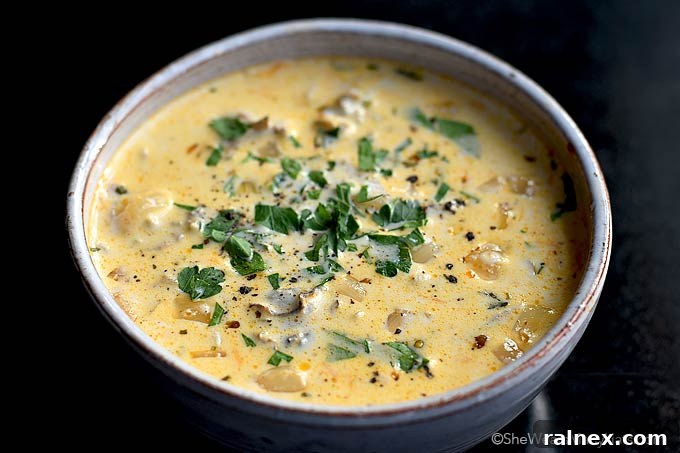
Elevating Your Oyster Stew: Expert Tips & Insights
While the recipe for oyster stew is delightfully simple, a few expert tips can transform a good stew into an unforgettable one. These insights will help you navigate common pitfalls and enhance the overall experience.
- Flavor Profile Customization: Some traditional oyster stews can be quite mild, even bland, for modern palates. This recipe is designed to be well-seasoned, offering a balanced depth of flavor. If you prefer a spicier kick, feel free to increase the ground red pepper. For a milder stew, reduce it slightly. You can also experiment with a pinch of cayenne pepper for extra heat or a dash of nutmeg for a hint of warmth.
- Preventing Scorched Milk: The most challenging aspect of oyster stew is often preventing the milk from scorching or curdling. Using a double boiler can be incredibly helpful for a truly gentle and even heating process, though it’s not strictly necessary. If using a regular saucepan, the most important thing is active vigilance. Do not leave the pot unattended while the milk is heating. Avoid distractions like starting a new chore. Simply be patient and keep the heat low. With consistent, gentle stirring, the milk should reach the desired temperature and begin showing bubbles around the edges in about 15 minutes.
- The Best Oysters: For the ultimate Oyster Stew, fresh shucked oysters are unequivocally the best choice. Their flavor is vibrant, and their texture is superior. Remember the classic guideline: fresh oysters are traditionally at their peak in the United States during months that contain an “R” (September through April). This period typically corresponds to colder water temperatures, which oysters thrive in, resulting in plump, flavorful shellfish.
- Choosing Shucked Oysters: If fresh shucked oysters are not readily available or convenient, look for high-quality shucked oysters that are packed in their own liquid (or plain water), specifically avoiding smoked oysters, which have a flavor too strong for this delicate stew. Ensure they are fresh and have a pleasant, briny aroma.
- Freezing Oysters for Later: Shucked oysters can be frozen successfully for up to 6 weeks. This is a fantastic tip if you find fresh oysters at a great price and want to enjoy stew later in the season. Simply freeze them in their liquid in an airtight container. Thaw them slowly in the refrigerator before using, and proceed with the recipe as usual.
- Serving Suggestions: Oyster stew is wonderfully versatile. Serve it with crisp, buttery crackers, a side of crusty artisan bread for dipping, or even a simple green salad to balance the richness. For garnish, a sprinkle of fresh chopped parsley or chives, or a dash of extra paprika, adds both visual appeal and a burst of fresh flavor. A small splash of dry sherry or white wine at the end can also add an extra layer of sophistication.
The Health Benefits of Oysters
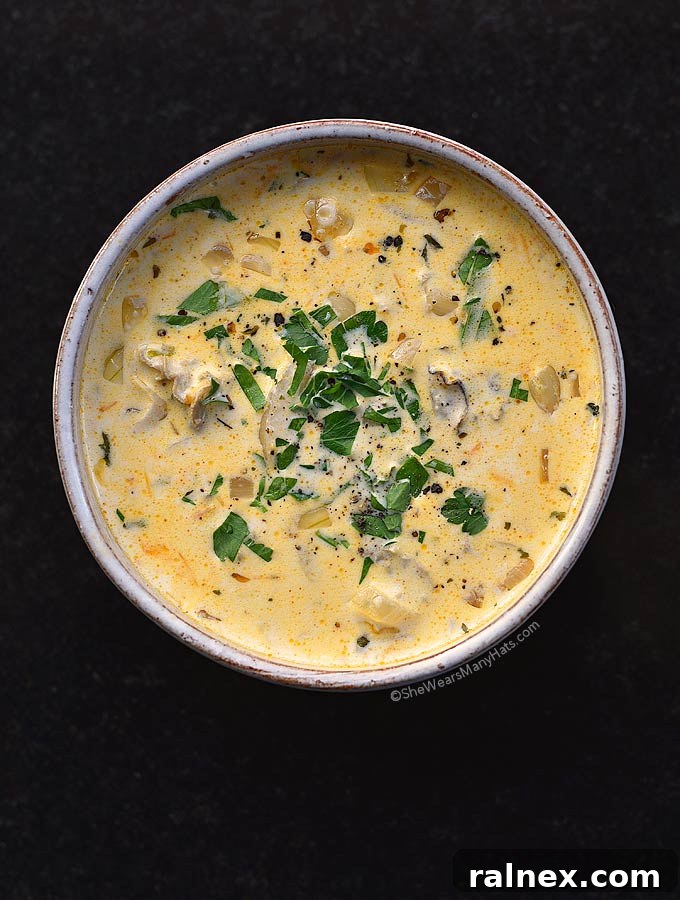
Beyond their exquisite taste, oysters are packed with an impressive array of nutrients. They are an excellent source of zinc, vital for immune function and wound healing, and also provide significant amounts of vitamin B12, important for nerve function and energy production. Oysters are rich in iron, selenium, and omega-3 fatty acids, contributing to heart health and overall well-being. They are relatively low in calories and high in protein, making them a nutritious addition to any diet.
More Delicious Soup Recipes to Explore:
If you enjoyed the warmth and comfort of this Oyster Stew, you might love exploring other comforting soup recipes:
- Coconut Chicken Soup Recipe – A delightful blend of creamy coconut and tender chicken.
- Easy Chicken Tortilla Soup Recipe – A vibrant and zesty soup with a satisfying crunch.
- Creamy Chicken and Wild Rice Soup Recipe – A hearty and wholesome classic, perfect for any season.
Oyster Stew Recipe
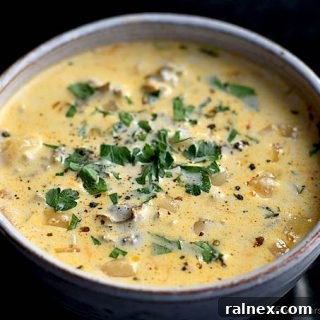
Oyster Stew Recipe
4
5 minutes
25 minutes
30 minutes
This savory oyster stew is the perfect food for a cold night, offering a comforting blend of creamy richness and fresh seafood flavor.
Ingredients
- 4 tablespoons unsalted butter
- 1 large onion, finely diced
- 2 garlic cloves, grated or minced
- 1/4 teaspoon ground red pepper (adjust to taste)
- 1/4 teaspoon paprika
- 1/4 teaspoon salt (or to taste)
- 1/2 teaspoon ground black pepper (or to taste)
- 6 cups whole milk or half and half
- 1 teaspoon dried parsley
- 16 ounces fresh raw oysters, with their liquid reserved
Instructions
- Melt butter over medium heat in a heavy-bottomed 3-quart saucepan.
- Add diced onion and sauté until tender and translucent, about 5 minutes.
- Add in minced garlic, continue to sauté for another 1-2 minutes, being watchful to not burn the garlic.
- Stir in ground red pepper, paprika, salt, and black pepper. Continue to stir and toast the seasonings for about 1 minute to release their full aroma.
- Carefully drain the oysters, reserving all the natural oyster liquid (oyster liqueur) separately.
- Reduce heat to low. Add the milk (or half and half), dried parsley, and the reserved oyster liqueur to the saucepan.
- Cook over low heat, stirring frequently, until the mixture is hot and just beginning to steam, with tiny bubbles appearing around the edges. Do NOT allow it to come to a boil, as this can curdle the milk.
- Add the drained oysters and continue to cook over low heat for just a few minutes (2-4 minutes), until the edges of the oysters begin to curl and they plump up. Avoid overcooking to keep them tender.
- Taste and adjust salt and pepper to your preference. Serve warm immediately. Enjoy!
Did you make this recipe?
Please leave a comment on the blog or share a photo on Facebook